Our Team
Our Founders

Richard Rusczyk
Art of Problem Solving was founded by Richard Rusczyk in 2003 to create interactive educational opportunities for avid math students. Richard is the author or a co-author of 7 AoPS textbooks and a past Director of the USA Mathematical Talent Search. He was a participant in National MATHCOUNTS, a three-time participant in the Math Olympiad Summer Program, and a USA Mathematical Olympiad winner (1989). He received the World Federation of National Mathematics Competitions Paul Erdös Award in 2014. He graduated from Princeton University in 1993, and worked as a bond trader for D.E. Shaw & Company for four years. AoPS marks Richard's return to his vocation - educating motivated students.

Glen Dawson
In 2014, Glen founded a learning center in Morrisville, North Carolina, that two years later became the first AoPS Academy campus. Glen served as the National Director of AoPS Academy until his retirement in 2019. He has experience as a college math professor, statistician, and expert SAS programmer. He has been a professional math tutor for many years, and specializes in training academically-advanced and high-performing math students. Glen is a graduate of Duke University and holds a graduate degree in statistics from Boston University.

David Patrick
Dave joined AoPS in 2004. He is the author or a co-author of 4 AoPS textbooks. Dave earned the sole perfect score on the American High School Mathematics Examination (AHSME) in 1988 and was a USA Mathematical Olympiad winner that year. He attended the Research Science Institute (RSI) in 1987, and the Math Olympiad Summer Program in 1988, where he first met fellow student Richard Rusczyk. He also finished in the top 10 on the Putnam exam in 1991. Dave graduated from Carnegie Mellon in 1992 with a BS in Mathematics/Computer Science and an MS in Mathematics. He went on to earn his Ph.D. in mathematics from MIT in 1997. He was an acting Assistant Professor at the University of Washington from 1997 to 2001. Dave is originally from Western New York and is an alumnus of the SUNY Buffalo Gifted Math Program.
Instructors
Interested in joining our team? Click here to learn more!
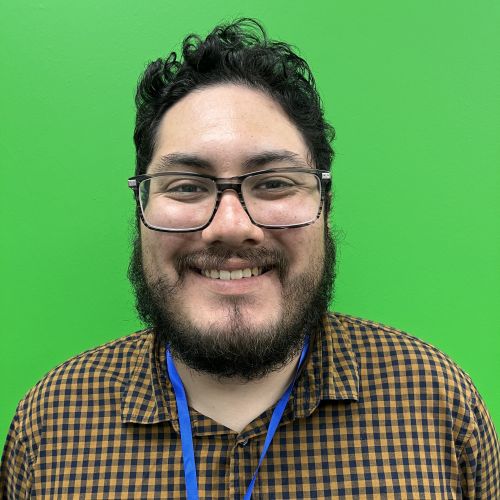
Sean Patlan
Sean graduated from Texas A&M University with a degree in Computer Engineering and a minor in Mathematics. After working as a software engineer for a few years following college, Sean discovered his passion for education. He began to work as a private math tutor and then as a high school math teacher at Xavier Academy. Sean loves the hands-on problem solving approach at AoPS. He is very excited to guide students as they tackle and approach new types of problems. Sean likes to give students a chance to approach new problems on their own. He believes that students learn just as much by making mistakes when practicing new approaches to problems as they do from hearing the correct approach, creating a classroom environment where exploration and productive struggle are valued.
Reginald Taylor
Mr. Taylor has been an educator for almost 30 years, with experience teaching grades K-College, especially middle school math, Algebra I, and supporting teachers through instructional coaching and leadership roles. Mr. Taylor loves that AoPS encourages problem-solving, creativity, and confidence in math, which aligns closely with how he believes students learn best. His teaching style is structured, encouraging, and student-centered. Students can expect him to be patient, clear, and supportive while still challenging them to think critically and grow. Colleagues can expect him to be dependable, professional, and collaborative, with a positive attitude and a strong commitment to helping students and colleagues succeed.
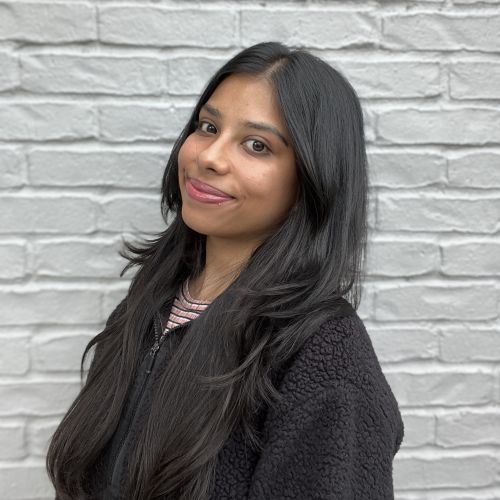
Noha Haneen Thomas
Noha discovered her passion for math and problem solving while pursuing her degrees in Computer Science. After earning her master's degree from the University of Houston, she continued to explore this passion by becoming a math instructor and co-founding a web development business with her husband. Noha was drawn to AoPS because of its strong focus on problem solving and understanding the 'why' behind concepts. She enjoys exploring different ways to solve problems and loves working with students, helping them build confidence and share in that same curiosity. Noha's teaching style is interactive, hands-on, and centered around making sure no student is left behind. She values adapting to different learning styles and enjoys building connections with her students to support their growth. With her energetic and engaging approach, she creates a classroom environment where math is both fun and approachable.

Tyler Hanner
Tyler has been a high school math teacher for over 20 years, teaching everything from Algebra 1 up through Calculus. He saw an opportunity at AoPS to further enhance student learning and performance, and looks forward to taking each student to another level. Tyler likes to ask questions to make students think and wants them to see things from many different sides to further understanding of the topic at hand. He believes that true mathematical understanding comes from exploring concepts from multiple perspectives and developing flexible problem-solving approaches. His classroom is an interactive space where students are challenged to think both efficiently and creatively, pushing beyond conventional methods to discover innovative solutions. Tyler is excited to work with motivated students who are ready to engage deeply with challenging mathematical concepts.
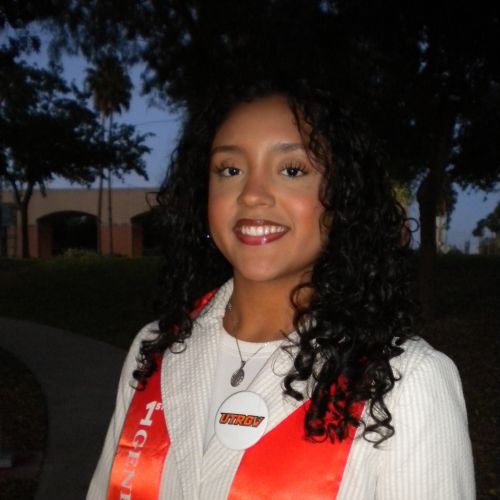
Neyla Montoya
Ms. Montoya is a recent graduate of the University of Texas Rio Grande Valley and will be starting her first year as a high school Mathematics teacher at LCISD for the 2026–2027 school year. Over the past four years, she has studied mathematics and worked as a tutor supporting undergraduate students in courses ranging from pre-college algebra to Calculus II. Ms. Montoya was drawn to AoPS because of its commitment to challenging students while creating a space where making mistakes is seen as an essential part of learning. As someone with a deep passion for mathematics and teaching, she values the importance of being wrong, asking questions, and using those moments to drive deeper understanding and exploration. Her teaching style is rooted in always asking "why" and encouraging her students to do the same, while also exploring the "how" behind the math. She sees learning as a partnership, where the classroom is a space for shared discovery rather than just instruction. In her classroom, students can expect lots of discussion, curiosity, and critical thinking, with an environment where students feel comfortable exploring, questioning, and growing together.

Reese Neal
Reese graduated from the Texas Academy of Mathematics and Science before attending Yale University, where he studied Computing and the Arts. After college, he completed a Princeton in Latin America fellowship, where he worked as a STEM instructor at Antigua International School in Guatemala. He will return to Houston this fall to pursue a Master of Architecture at Rice University and is excited to continue making teaching an important part of his life. Reese first learned about AoPS through a college friend who had participated in AoPS programs as a child. He was struck by the genuine enthusiasm and love for mathematics his friend still carried years later and by the way he credited AoPS with cultivating that curiosity. He is excited by the opportunity to foster that same sense of curiosity, self-motivated learning, and intellectual confidence in students. His teaching style emphasizes posing thoughtful questions rather than immediately providing answers, encouraging students to engage in self-guided inquiry and deeper conceptual understanding.
